
By Lucas Abal.
Chacarita’s Rising Star
Nestled in the heart of Buenos Aires, Anchoita has become a culinary gem that food enthusiasts and critics alike are talking excitedly about. Recently honored with the Michelin Green Star, this restaurant is the brainchild of Enrique Piñeyro, a modern Renaissance man whose acclaim spans beyond the kitchen. Like the polymaths of the medieval era who excelled in various fields such as science, painting, and sculpture, Piñeyro is a contemporary equivalent: a medical doctor, actor, film director, expert aviation pilot, and now, a restaurateur. Previously known for his other works, Piñeyro brings the same passion to Anchoita as he does to his many other well-known interests.
The Michelin Green Star is an award that highlights restaurants at the forefront of the industry regarding sustainable practices. These establishments hold themselves accountable for both their ethical and environmental standards. In the case of Anchoita, they produce a significant portion of the raw materials they use for cooking. I found it interesting to discover that, for many, this Green Star recognition is more significant than traditional Michelin stars, underscoring a commitment to sustainability that resonates with today’s conscientious diners.
Historically, Chacarita has been known primarily for its cemetery, but today it is brimming with trendy new dining spots, along with its neighboring district, Villa Crespo. In Chacarita, you’ll find numerous popular small-plate restaurants like Lardito, Picarón, Ácido, and Naranjo Bar. Anchoita is also located in Chacarita, fitting perfectly into this neighborhood that has recently transformed into a culinary destination, hosting several iconic gastronomic spots.
Tips and Tricks to Dine
If you’re hoping to dine at Anchoita, be prepared for a bit of a challenge. Currently, reservations for Anchoita are not available for 2024. When you visit their reservation page, you’ll be greeted with a message stating, «No reservations available for 2024.» For the past two years, Anchoita has used a unique reservation system where they open the booking agenda on a specific day at a specific time. For instance, reservations for 2024 were opened on December 27, 2023, at 1 PM.
Due to the hype, the reservation website crashed almost immediately once the slots opened. On both occasions when reservations were opened (for 2023 and 2024), the site became overloaded, making it very difficult to secure a spot. Within an hour, all tables were fully booked. This reservation system might be the only aspect of Anchoita that has its detractors, as the high demand has left many disappointed.
However, there is an alternative way to get a table. If you arrive early and put your name on the waiting list, there’s a good chance you’ll be seated later in the evening, around 11 PM, once the reservations are cleared. The best strategy is to arrive at Anchoita around 7:30 PM, put your name on the waiting list, and then head to Anchoita Cava, a spot around the corner.
Anchoita Cava, true to its name, offers an excellent selection of wines, as well as cheeses and charcuterie. It’s the perfect place to wait while enjoying a few glasses of wine and some cheese. Anchoita Cava features high tables, and as long as you can find a table, you can order wine and cheese. If there are no available tables, you can still order wine and enjoy it standing on the sidewalk, chatting with others.
Another way to experience Anchoita’s culinary delights is by visiting Panadería de Anchoita. Unlike Anchoita, which only opens in the evening, the bakery operates during the day. Here, you can enjoy a variety of offerings, including: laminated pastries like croissants and medialunas, a selection of sandwiches made with different types of freshly baked bread, specialty coffee, and a small selection of artisanal ice creams.
A Taste of Argentina
Anchoita captures the rich and diverse culinary heritage of Argentina. In fact, the name «Anchoita» itself originates from a species of fish found in the Argentine sea, which belongs to the same family as the famous anchovies and boquerones. However, the concept of Argentine cuisine has always seemed somewhat diffuse to me.
In my family, the best cooks were my paternal grandmother, Ana, and my maternal grandfather, Carlos, both Argentines who prepared dishes from a variety of cultural backgrounds. Ana’s signature dishes included niños envueltos, which are stuffed cabbage rolls with Middle Eastern roots; ravioles, a type of Italian ravioli; varenikes, Eastern European dumplings; sopa paraguaya, a semolina and cheese bread from Paraguay; and she was also a great asadora, or grill master.
Carlos excelled with the Argentine versions of classic dishes from other countries: sorrentinos, a stuffed pasta similar to agnolotti or ravioli but larger and with more filling, with Italian roots despite the name not being related to Sorrento; revuelto gramajo, a scramble of potatoes, eggs, and cooked ham, clearly inspired by Spanish huevos rotos con papas y jamón; mondongo, very similar to callos a la madrileña; and empanada gallega, with a filling made of fish that can be found in the Argentine sea, like hake.
All this variety, for me, defines Argentine cuisine, making it hard to distinguish it as a single entity. But ultimately, the entire menu at Anchoita reflects this diversity I grew up with. The menu at Anchoita mirrors this diverse array of influences that I found in my grandparents’ cooking. You can find dishes such as choripán, a sausage sandwich typical of Argentina; empanada de surubí, a catfish pasty from the Argentine northeastern region; chipa guazú, a Paraguayan cornbread; paté from France; pizza and various pastas from Italy; rice dishes inspired by different cuisines; Argentine grilled beef; and river or sea fish from Argentina.
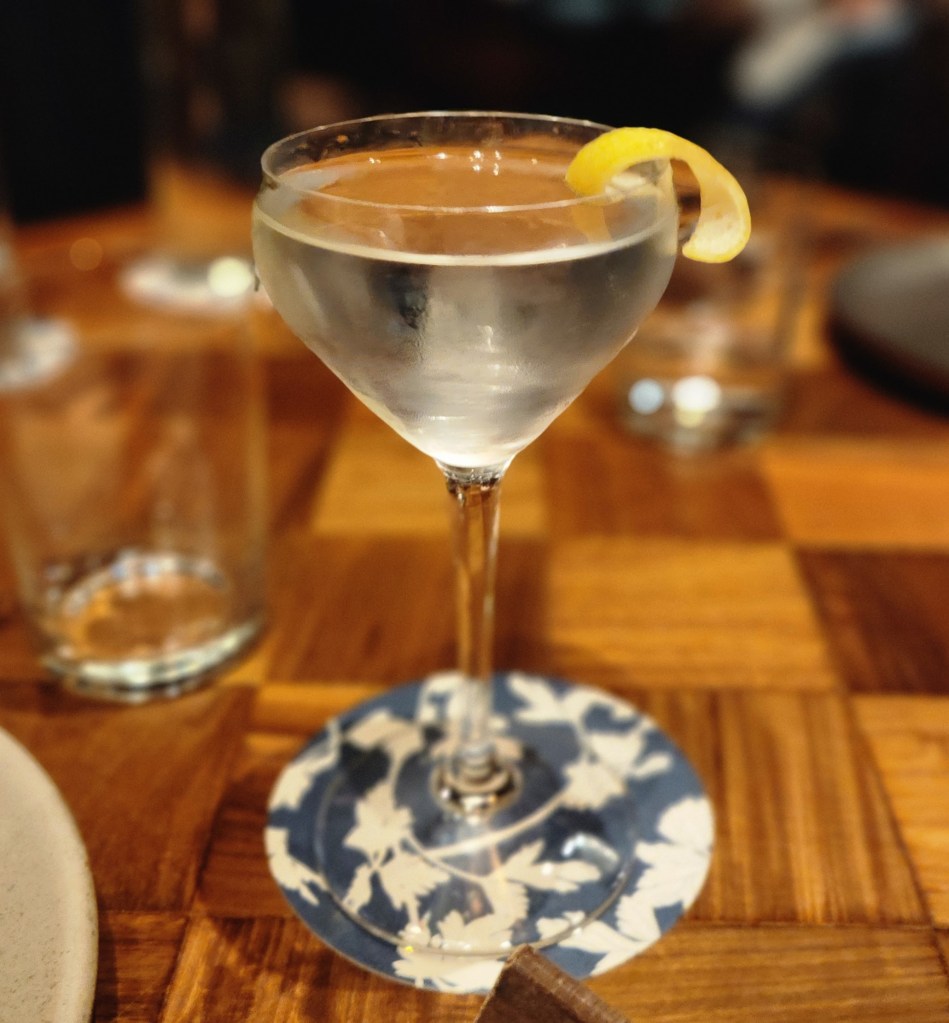
Anchoita’s cocktail menu also bears the mark of Argentine influence. Notably, it features the Clarito, which I consider the Argentine martini. This cocktail was created by perhaps the most famous Argentine bartender, Santiago «Pichín» Policastro. In 1955, Policastro wrote about this drink, saying, «a dry, strong, sturdy cocktail, almost transparent in color, that in its clear and calm appearance contains a harmonious combination of dry beverages with high alcohol content. And through the years, every day my satisfaction grows at having, in a happy moment, managed to interpret with my ‘Clarito’ the palate of the Argentine drinker.» (Policastro, Santiago, Tragos Mágicos, Ediciones Riverside, Buenos Aires, 1955, p. 49)
Epilogue
As we conclude this journey through Anchoita, I’d like to share some personal favorites from the current menu. First, the tartare stands out with its delicate preparation. Next is the chipa relleno, a modern twist on a traditional Paraguayan cheese bread. Finally, the tapa de papa, huevo y morcilla combines the taste of blood sausage with eggs and potatoes. Notably, all three dishes feature eggs, highlighting the exceptional quality of the eggs used at Anchoita, a product not easily found at such high standards in Argentina.
Lucas Abal (34)
Lawyer and Curious Eater
lucasabal@gmail.com
 sedcontra.com.ar